
In the modern digital economy, small and medium-sized enterprises (SMEs) have become the lifeblood of global commerce. From e-commerce storefronts and local service providers to specialized consulting agencies, small businesses leverage digital tools, cloud platforms, and remote work infrastructure to compete with industry giants. However, this rapid digital transformation has brought an unprecedented level of exposure to sophisticated cyber threats.
For years, a dangerous myth persisted in the business world: “Our company is too small for hackers to care about.”
In 2026, cybersecurity intelligence tells a radically different story. Automated threat bots, artificial intelligence-driven phishing campaigns, and supply-chain vulnerabilities have turned small businesses into prime targets for cybercriminals worldwide. Unlike enterprise-level corporations that maintain dedicated Security Operations Centers (SOCs) and million-dollar IT budgets, small businesses often operate with minimal security resources, making them lucrative, low-hanging fruit for threat actors.
A single successful breach can result in devastating financial losses, irreversible reputational damage, regulatory fines, and operational downtime from which many small companies never recover. According to national cybersecurity benchmarks, over 60% of small companies that suffer a major data breach go out of business within six months of the event.
To survive and thrive in today’s threat landscape, small businesses must treat cybersecurity not as an isolated technical issue, but as a core operational strategy. This comprehensive blueprint outlines the modern cyber threat landscape facing SMEs and provides an actionable, step-by-step strategy to secure your infrastructure, data, employees, and digital perimeter.
Part 1: Understanding the Threat Landscape Facing Small Businesses
To build an effective defense, business owners and decision-makers must first understand the specific threat vectors used by modern threat actors. Today’s cyber attacks are rarely targeted personal hacks; instead, they are automated, highly scalable attacks designed to find open doors anywhere on the internet.
1. AI-Powered Phishing and Business Email Compromise (BEC)
Phishing remains the single most prevalent entry point for corporate data breaches. Historically, phishing emails were relatively easy to spot due to poor grammar, awkward phrasing, or obvious typos. However, the integration of generative AI tools by cybercriminals has revolutionized social engineering attacks.
Modern phishing emails are contextually accurate, grammatically flawless, and highly personalized. Attackers execute Business Email Compromise (BEC) campaigns by impersonating company executives, vendors, or banking institutions, tricking employees into transferring corporate funds or disclosing administrative credentials.
2. Double-Extortion Ransomware
Ransomware has evolved beyond simply encrypting company files and demanding payment for a decryption key. Modern ransomware operators practice double extortion:
- Phase 1 (Encryption): Lock company databases, halting daily operations.
- Phase 2 (Exfiltration): Steal sensitive customer data, financial records, and proprietary intellectual property before encryption, threatening to publish or sell the data on the dark web if the ransom is not paid.
3. Supply Chain and Third-Party Risk
Small businesses frequently use third-party software, cloud applications, and external vendors for accounting, marketing, and customer relationship management (CRM). Threat actors exploit vulnerabilities in these vendor software integrations to bypass corporate firewalls and gain lateral access to internal business networks.
4. Credential Stuffing and Weak Access Controls
With billions of leaked credentials circulating on dark web marketplaces from historical breaches, attackers use automated bots to attempt these username-password combinations across thousands of business portals. When small business employees reuse personal passwords for corporate accounts, they inadvertently leave company doors wide open.
Part 2: Building a Multi-Layered Security Architecture (Defense-in-Depth)
Relying solely on an antivirus program or a basic firewall is no longer sufficient. Modern corporate security requires a Defense-in-Depth approach—a strategy that layers multiple security controls throughout an IT environment so that if one security measure fails, secondary defenses immediately step in to intercept the threat.
Layer 1: Identity and Access Management (IAM)
Identity is the new security perimeter. Protecting who logs into your systems is the first and most vital defense line.
- Enforce Multi-Factor Authentication (MFA) Universally: MFA adds a mandatory second verification step (such as an authenticator app code or hardware security key) beyond just a password. Implementing MFA across all business tools—email, cloud storage, banking portals, and remote access software—neutralizes over 99% of automated credential-based attacks.
- Deploy a Centralized Business Password Manager: Employees should never be expected to memorize dozens of complex passwords. A centralized business password manager (such as Bitwarden, 1Password, or Dashlane) allows administrators to enforce 16+ character randomized passwords while providing secure credential-sharing mechanisms across teams.
- Adopt the Principle of Least Privilege (PoLP): Employees should only be granted the minimum level of access necessary to perform their specific job roles. Standard employees do not need administrative rights on their local machines or access to confidential payroll folders.
Layer 2: Endpoint Protection and Device Hygiene
Every computer, laptop, tablet, and smartphone connected to your network represents a potential entryway for attackers.
- Transition from Traditional Antivirus to Endpoint Detection and Response (EDR): Legacy antivirus software relies on signature databases to recognize known viruses. EDR tools use behavior analytics and machine learning to detect suspicious activity in real time—stopping ransomware execution even if the specific malware strain has never been seen before.
- Automated Patch Management: Unpatched software vulnerabilities are among the easiest entry points for automated exploit kits. Operating systems (Windows, macOS, Linux), web browsers, and third-party productivity software must be updated continuously through automated patch management policies.
Layer 3: Network Security and Segmentation
Securing the transit path of corporate data prevents interception and lateral movement within your infrastructure.
- Wi-Fi Network Isolation: Never run internal operations on an unsegmented Wi-Fi network. Configure separate Virtual Local Area Networks (VLANs) for corporate devices, guest access, and Internet of Things (IoT) devices like smart TVs and security cameras.
- Deploy Enterprise-Grade Firewalls and Next-Gen VPNs: Traditional routers lack deep packet inspection capabilities. Small businesses should utilize Next-Generation Firewalls (NGFW) to monitor incoming and outgoing traffic, block malicious IP ranges, and enforce encrypted VPN or Zero-Trust Network Access (ZTNA) protocols for remote workers.
Part 3: Establishing the 3-2-1-1-0 Backup Strategy for Disaster Recovery
Data loss can occur not only from cyberattacks, but also from hardware failures, physical disasters, or accidental human deletion. An immutable, well-tested backup strategy is your ultimate insurance policy against operational collapse.
To ensure business continuity in 2026, small enterprises must implement the updated 3-2-1-1-0 Backup Rule:
| Backup Rule Parameter | Description & Execution Strategy |
| 3 Copies of Data | Maintain your primary working data plus at least two independent backup copies. |
| 2 Different Media Types | Store backups on two distinct storage technologies (e.g., local NAS drives and cloud storage). |
| 1 Off-Site Copy | Keep at least one backup copy in a physically or geographically isolated location (e.g., cloud data center). |
| 1 Immutable / Offline Copy | Ensure at least one backup is Air-Gapped or write-once-read-many (WORM) locked so ransomware cannot corrupt it. |
| 0 Backup Errors | Perform routine, automated integrity tests to guarantee backups recover with zero restoration errors. |
The Critical Importance of Immutable Backups
Modern ransomware strains actively search local networks to find and wipe out online backup files before encrypting the main systems. Immutable backups utilize object-locking technology in the cloud, preventing data from being altered, overwritten, or deleted by anyone—including network administrators or ransomware bots—for a set retention window.
Part 4: Formulating a Small Business Cybersecurity Policy
Technical tools are only as strong as the human policies governing their use. Establishing clear, written security guidelines sets expectations for workplace behavior and reduces organizational risk.
A robust cybersecurity policy for a small business should contain five foundational sections:
1. Acceptable Use Policy (AUP)
Establish explicit rules regarding how corporate devices, internet access, and business software may be used. Specify prohibited activities, such as installing unauthorized third-party software (Shadow IT) or using corporate laptops for personal streaming or torrenting.
2. Remote and Hybrid Work Policy
Detail mandatory security protocols for employees working remotely. Require the mandatory use of company-approved VPNs/ZTNA when connecting from public Wi-Fi networks, enforce screen-lock timers on laptops, and prohibit unauthorized family members from using corporate devices.
3. Data Classification and Handling Guidelines
Classify company data into distinct tiers (e.g., Public, Internal, Confidential, Restricted). Define clear rules for handling customer PII (Personally Identifiable Information), payment details, and trade secrets, specifying how confidential files must be encrypted during transit and at rest.
4. Incident Response Plan (IRP)
Outline a clear, step-by-step operational protocol in the event of a suspected security incident. Define who to contact immediately, how to isolate compromised machines from the local network, and how to preserve log files for legal or forensic investigation.
5. Employee Offboarding Procedure
Establish an automated checklist for terminating employee access immediately upon departure. Instantly revoke cloud platform credentials, collect company-owned hardware, and rotate shared passwords or access tokens to prevent unauthorized post-employment access.
Part 5: Fostering a Culture of Security Awareness
Technology handles automated defenses, but human employees remain the ultimate decision-makers at the digital perimeter. Cybercriminals specifically target human emotions—urgency, fear, curiosity, and authority—to bypass technical controls.
1. Shift from Annual Seminars to Continuous Micro-Learning
Traditional annual cybersecurity lectures are ineffective; employees forget the majority of information within weeks. Instead, deploy monthly or quarterly 5-minute interactive security modules that cover current attack trends, safe browsing habits, and credential hygiene.
2. Conduct Routine Simulated Phishing Exercises
Run benign, simulated phishing campaigns to test employee alertness. Use real-world templates to see who identifies the malicious link and who falls for the trap. Treat failed simulations not as an opportunity for punishment, but as a constructive teaching moment to reinforce training.
3. Establish a “No-Blame” Incident Reporting Culture
If an employee clicks a suspicious link or inadvertently enters their password on a dubious landing page, their immediate reaction determines the severity of the breach. If employees fear immediate termination or public embarrassment, they may attempt to hide their mistake—giving threat actors hours or days of undetected access.
Promote an open, security-first culture where employees are rewarded for reporting accidental mistakes immediately, allowing your technical team to isolate the threat before lateral damage occurs.
Part 6: Securing Your E-Commerce and Website Infrastructure
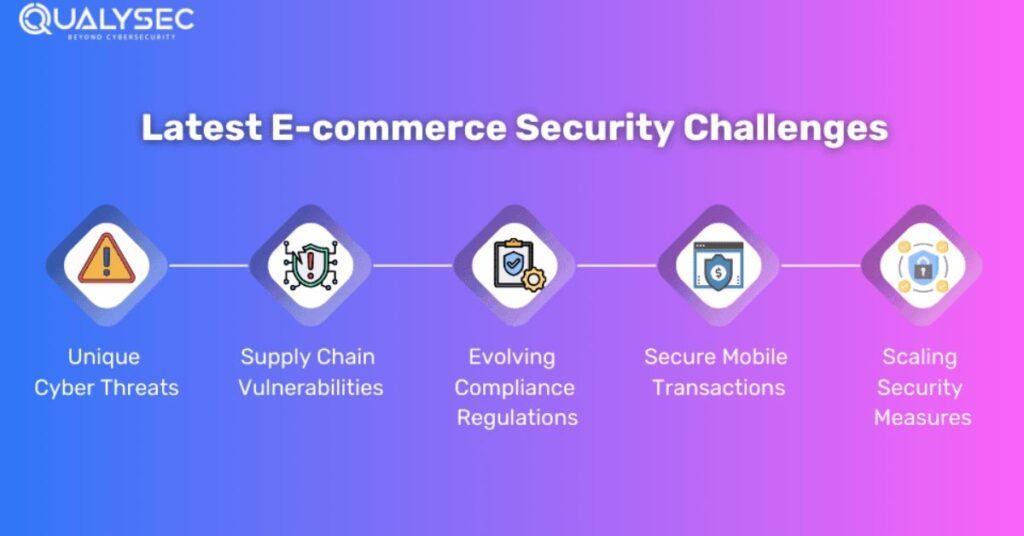
For many small businesses, their website is their primary engine for revenue generation and customer acquisition. A compromised website can lead to blacklisting by search engines, stolen customer credit card records, and severe brand erosion.
Essential Website Protection Steps:
- Enforce HTTPS with Up-to-Date TLS Certificates: Encrypt all communications between customer browsers and your web server. Ensure your site uses modern TLS 1.3 encryption protocols.
- Implement a Web Application Firewall (WAF): Place a cloud-based WAF (such as Cloudflare, Sucuri, or Fastly) in front of your website to filter out malicious web traffic, block Distributed Denial of Service (DDoS) attacks, and stop SQL Injection (SQLi) attempts.
- Keep CMS, Themes, and Plugins Updated: If running content management systems like WordPress, unpatched plugins represent the leading cause of website compromise. Audit active plugins regularly, remove unused software, and automate security updates.
- Harden Database and Admin Access: Change default administrative login URLs (e.g., mask
/wp-admin), enforce MFA on all website management accounts, and restrict database access to specific, trusted IP addresses.
Part 7: Small Business Cybersecurity Compliance and Frameworks
Navigating cybersecurity standards can feel overwhelming for small business owners. Fortunately, recognized global frameworks provide structured, step-by-step blueprints tailored for smaller operational scales.
Key Cybersecurity Frameworks to Consider:
- NIST Cybersecurity Framework (CSF 2.0): Developed by the National Institute of Standards and Technology, CSF organizes security operations into six core functions: Govern, Identify, Protect, Detect, Respond, and Recover.
- CIS Critical Security Controls (Implementation Group 1): The Center for Internet Security provides a prioritized set of cyber defense actions. “Implementation Group 1 (IG1)” is designed specifically for small businesses with limited IT resources, focusing on essential cyber hygiene.
- ISO/IEC 27001: An international standard for information security management. While full certification can be resource-intensive, adopting its guidelines helps establish enterprise-grade credibility when bidding for corporate or government contracts.
Part 8: The Cybersecurity Implementation Roadmap for 2026
To avoid operational fatigue, small businesses should approach cybersecurity implementation through a phased, prioritized roadmap over a 90-day window.
Phase 1: Days 1–30 (Immediate Critical Hygiene)
- Audit all company devices, cloud applications, and administrative accounts.
- Enforce Multi-Factor Authentication (MFA) across all email, financial, and cloud systems.
- Deploy a centralized business password manager and eliminate password reuse.
- Revoke administrative rights on local employee workstations.
Phase 2: Days 31–60 (System Hardening & Threat Detection)
- Replace legacy antivirus software with an EDR endpoint monitoring platform.
- Configure network firewalls, isolate guest Wi-Fi networks, and segment smart office (IoT) devices.
- Implement an automated 3-2-1-1-0 backup strategy featuring cloud-based immutable storage.
- Enable automated operating system and third-party software patching.
Phase 3: Days 61–90 (Policy, Culture, and Continuity Testing)
- Draft and distribute a comprehensive written Cybersecurity Policy and Acceptable Use Policy.
- Roll out micro-learning security awareness modules and conduct a baseline simulated phishing test.
- Test your disaster recovery plan by performing a full system restoration from your backups.
- Schedule bi-annual internal security reviews or external vulnerability assessments.
Conclusion: Turning Cybersecurity into a Competitive Advantage
In the modern digital economy, cybersecurity should no longer be viewed as a burdensome cost center or an impediment to daily productivity. Instead, robust cybersecurity is a powerful market differentiator and a business enabler.
Clients, enterprise partners, and retail customers are increasingly conscious of data privacy and cyber risks. Demonstrating that your small business proactively safeguards sensitive data builds deep organizational trust, enhances customer loyalty, and provides a distinct competitive advantage over less secure competitors.
By systematically applying the principles outlined in this blueprint—enforcing strict identity controls, hardening your network perimeter, maintaining immutable backups, and cultivating a security-aware workplace culture—you transform your business from a soft target into a resilient digital fortress.
Cybersecurity is not a one-time project; it is an ongoing operational commitment. Start taking immediate steps today to safeguard your digital assets, protect your bottom line, and secure your company’s future in 2026 and beyond.